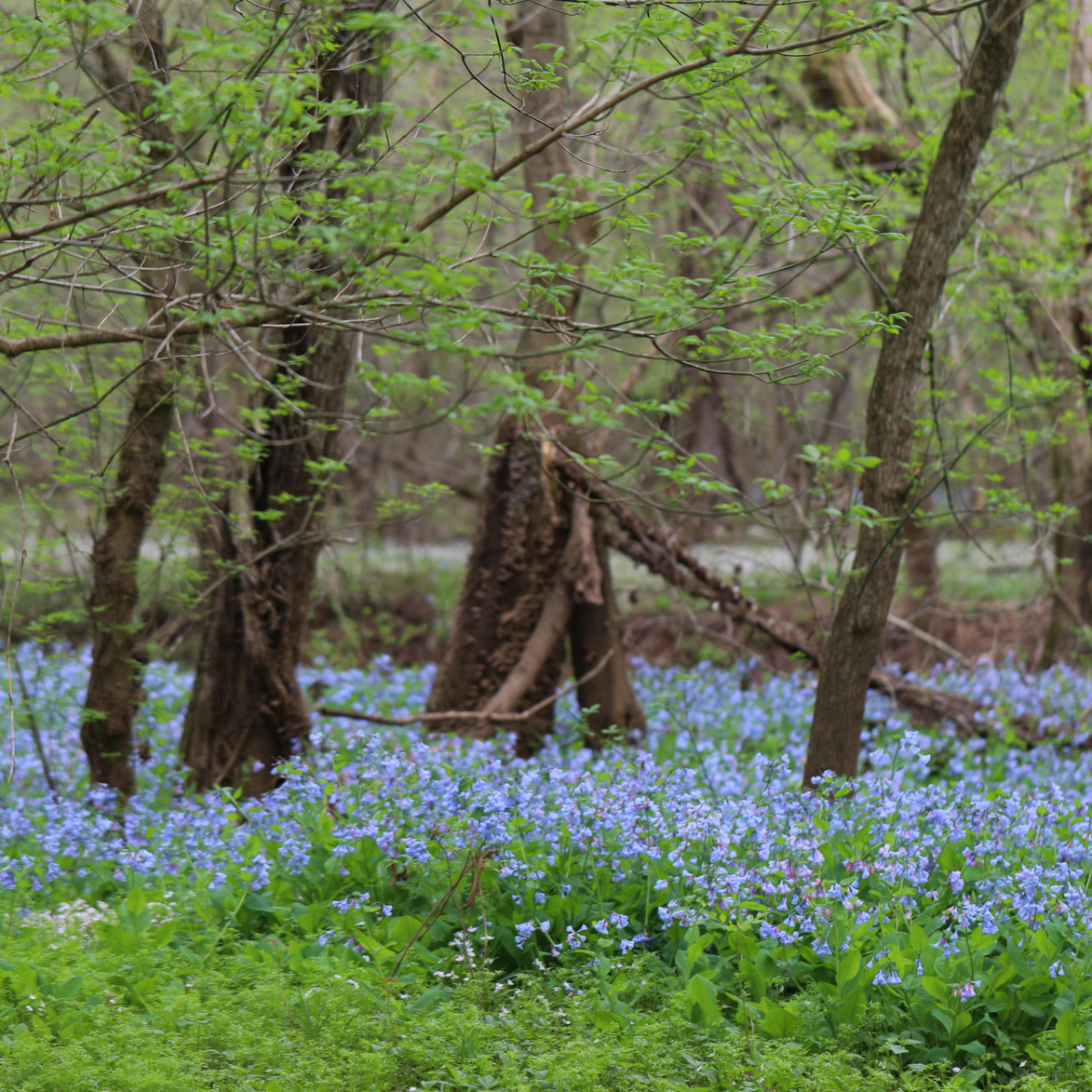
Virginia bluebells
Mertensia virginica
Mertensia virginica
179 remaining
Couldn't load pickup availability
Sun/shade: Part to full shade
Soil moisture: Medium
Height: 1.5'-2'
Flowering period: April
Deer resistance: Medium
Ring in the springtime with Virginia bluebells! Sky-blue flowers open alongside pink flower buds, for a textured pastel display. The bell-shaped blooms appear in April and are a favorite nectar source for queen bumble bees.
A plant of moist woodlands, Virginia bluebells can form extensive colonies on forested floodplains. Although it may be legion in the springtime, this plant is a true ephemeral, disappearing leaves and all by the end of June. It persists from year to year underground, returning each spring to bask in the sunlight before the forest canopy sprouts leaves.
Virginia bluebells can be an early season staple of the shade garden, provided that the shade is from a deciduous tree. The plant may struggle if it doesn’t receive at least partial sun in the springtime. Virginia bluebells is a great addition to a soft-landings garden, offering floral resources to butterflies, moths, and mason bees, in addition to queen bumble bees. As one of the first flowers of the year to appear, it can extend the season for a wildflower garden. Its blue blossoms are a perfect complement to the bright yellow blooms of golden or roundleaf groundsel.
This plant will fare best in a moist soil that’s rich in organic matter. A thin layer of fallen leaves on the ground surface will help promote these soil conditions. Due to the fact that Virginia bluebells is only present in the springtime, it should be planted in the same space as a later blooming plant, such as tall thimbleweed or white bergamot. Care should be taken, however, to avoid buildup of standing dead stems and debris from these other plants which could interfere with the growth of the Virginia bluebells. Trimming back last year’s dead stems to approximately 8” in March and judiciously distributing the resulting debris will aid in the continued return of the Virginia bluebells.
Our bluebells are grown from seed and are never dug from the wild. They are second year plants and are priced to reflect this. They will bloom their first or second season after planting.
Photo 1 by Kirk Gardner, CC BY 4.0. Photo 2 by Judy Gallagher, CC BY 4.0.