Big-leaved Aster
Eurybia macrophylla
Eurybia macrophylla
76 remaining
Couldn't load pickup availability
Sun/shade: Part to full shade
Soil moisture: Medium
Height: 1-3'
Flowering period: September
Deer resistance: Medium
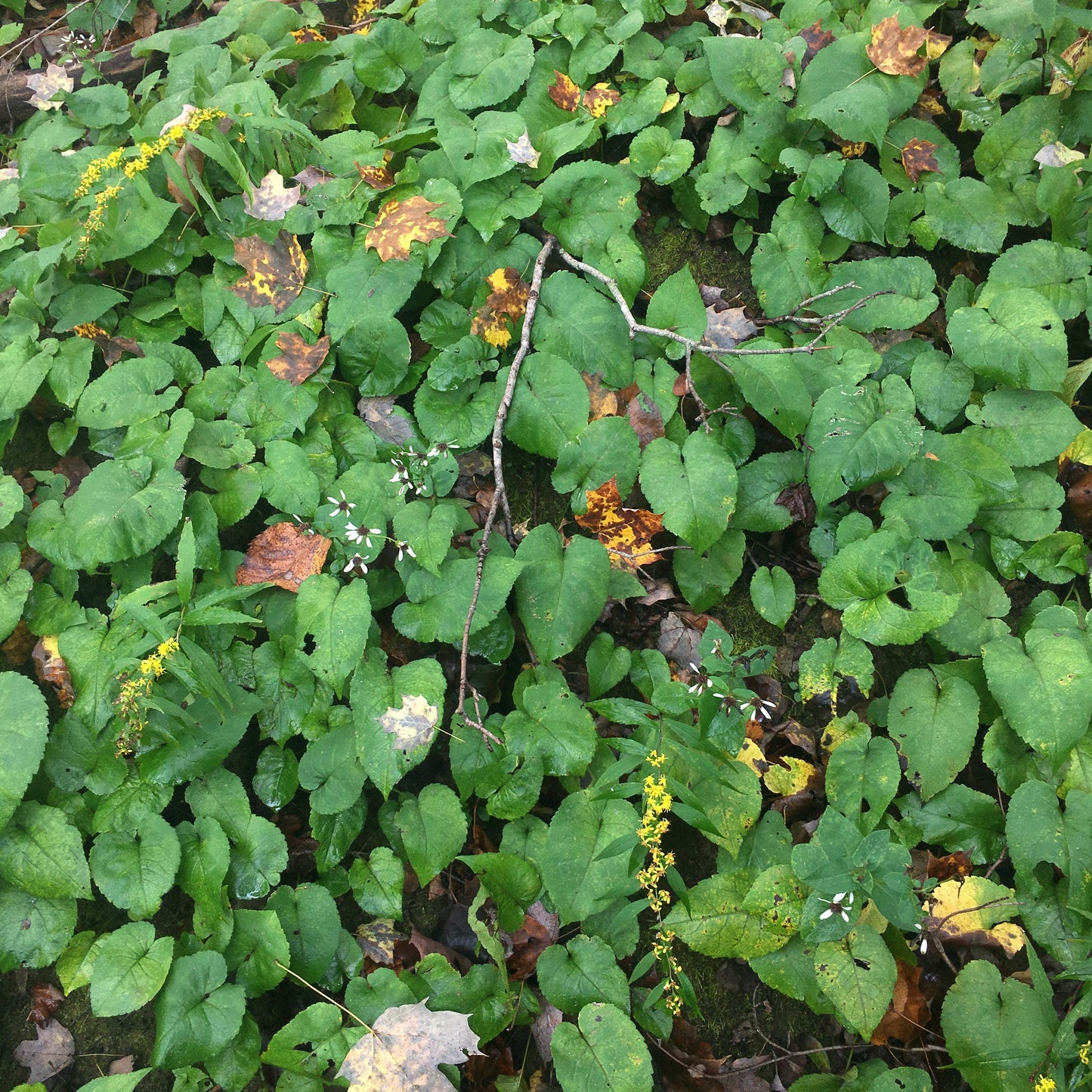
Big-leaved aster’s white or lavender flower petals are more widely spaced than those of many asters, creating an overall display that has an attractive lightness about it. The leaves at the plant’s base are heart-shaped and quite large, emerging in the spring. Due to big-leaved aster’s low-growing foliage and tendency to spread via long rhizomes, it can function as a groundcover, especially in shady locations.
In natural situations, big-leaved aster is a woodland plant, growing under the forest canopy as well as in gaps and at the forest edge. In the garden, big-leaved aster prefers partial shade and tolerates full shade, though it will produce fewer flowers in the latter. The plant can handle soil moisture ranging from moderately wet to dry, and does best in the average moisture condition, which is typical of most yards.
With its attractive foliage and bloom, bigleaf aster is a good choice for both formal and naturalistic gardens, especially for filling in bare soil through the spreading action of its rhizomes. To complement bigleaf aster’s white, late-season blooms, one might want to plant heartleaf aster and/or zigzag goldenrod.
In terms of wildlife value, bigleaf aster supports numerous pollinators, including long and short-tongued bees, flies, wasps, beetles, and butterflies. The plant is one of the earlier blooming late season plants, and as such, it is especially important to aster-specialist bees when they first emerge in August. Many of these bees are fall mining bees, ground-nesters whose larvae have strict pollen requirements and often rely on the pollen from asters and goldenrods for their nutrition.
Photo 1 © Dominique Menard, CC BY 4.0. Photo 2 by Julie Slater.